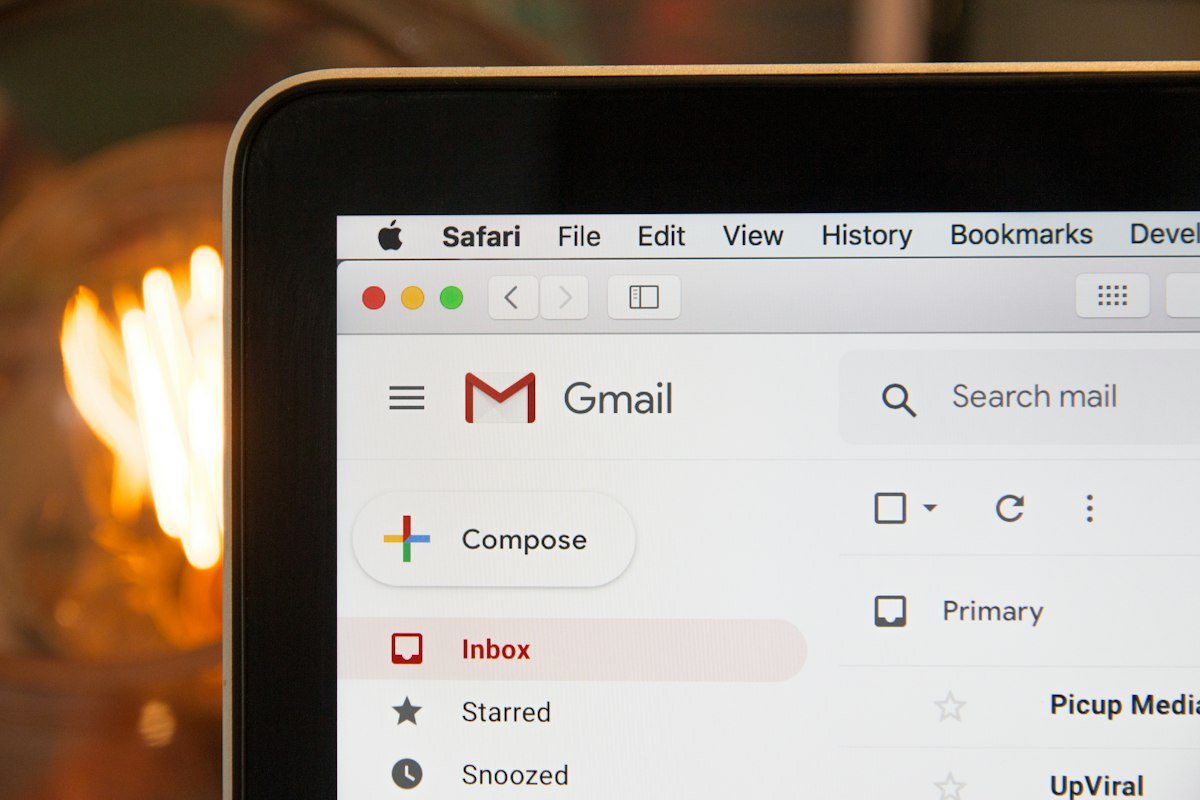
In 2012, the Slack founders confidently declared that email would be dead within a generation. The tech industry nodded along. Inboxes were chaotic, archaic, and embarrassing — relics of a pre-smartphone world. Fast-forward to 2025: Grammarly paid nearly a billion dollars to acquire an email app, then renamed the entire company after it. Google overhauled Gmail for the first time in a decade. Notion launched a standalone email client. Yahoo — yes, Yahoo — rebuilt its Mail app from the ground up. The funeral for email has been called off. In fact, it never made sense in the first place.
"Grammarly acquired an email app, then renamed the entire company after it."
The mainstream view: email is broken, and we deserve better
The critics are not entirely wrong. Email is broken in obvious ways. The average knowledge worker receives 121 emails a day and spends nearly 12 hours a week just processing them — 28 percent of their entire working week consumed by an inbox that never empties. In a 2025 survey of more than 6,000 professionals, 79 percent blamed constant emails and messages for their biggest workplace struggles. Slack promised to fix all this, and for real-time, informal team chat, it delivered. Internal email volumes fell by around 32 percent at companies that adopted Slack. That is a genuine improvement.
The progressive argument goes further: email is hierarchical, formal, and anxiety-inducing. It rewards those who process messages fastest rather than those who think most clearly. Slack, Teams, and Discord represent a more democratic, human-centred approach — less formal, more immediate. This is the story Silicon Valley told itself, and the industry press largely repeated it.
The case for email: it never left, and now it is evolving
There is one problem with this narrative: email never actually declined. While the tech industry was busy declaring its death, 4.83 billion people worldwide were quietly using it every single day. 392 billion emails are exchanged daily in 2025 — growing at 7.7 percent annually and projected to reach 523 billion by 2030. Slack's 38.8 million daily active users sounds impressive until you compare it to email's user base, which represents 56 percent of the entire global population. Email is not a niche productivity tool. It is the most universal communications protocol ever created.
The deeper reason email survived its own funeral is structural, not sentimental. It is the only channel that works across every company, every country, and every platform — without any platform's permission. When Meta shut down Workplace in 2025, every conversation stored there became inaccessible overnight. That cannot happen to your inbox. Email creates permanent, searchable records that no platform can delete. It is the backbone of external communication, legal documentation, and cross-organisational coordination. Slack was never designed to do any of those things. That is not a criticism — it is a design constraint.
"Email is the perfect staging ground for orchestrating multiple AI agents simultaneously."
But the most compelling argument for email is not about what it survived. It is about what it is becoming. Every serious AI company has concluded that the inbox is the richest, most structured dataset of a professional's working life — relationships, commitments, priorities, deadlines — all timestamped and searchable. Grammarly's CEO Shishir Mehrotra said it plainly when announcing the Superhuman acquisition: email "is the perfect staging ground for orchestrating multiple AI agents simultaneously." This is why Google is rebuilding Gmail around Gemini 3. Why Notion launched an AI email client. Why Yahoo rebuilt from scratch. The inbox is not being replaced by AI — it is becoming AI's primary interface.
Consider what this means in practice. Shortwave's Tasklet feature lets you type a plain-English instruction — "schedule a follow-up with James next week and add it to Asana" — and your email client executes it across apps and calendars in a single command. Superhuman's AI learns your writing voice from your sent history and drafts replies that sound like you. Gmail's Gemini reads entire threads and surfaces what actually requires your attention. The inbox is not a pile of messages anymore. It is becoming an intelligent, proactive assistant — built on top of the most universally connected protocol in existence.
What it means for you
If you abandoned email for Slack and feel vaguely guilty about your inbox, now is a reasonable time to reconsider. The new generation of AI email tools — Superhuman, Shortwave, Notion Mail, Gmail with Gemini — are not incremental improvements. They represent a genuine step change in what the inbox can do. Superhuman's users report saving four hours a week. That is a meaningful productivity return for a modest monthly subscription.
More broadly, if you create content or run a business, email is still the only channel you truly own. Substack hit $1.1 billion in valuation in 2025 on the back of five million paid email subscribers. Beehiiv serves 350 million monthly readers. Audiences are not just tolerating email — they are paying for it. The newsletter boom is proof that when the content is valuable, people actively choose to open their inboxes. That is not the behaviour of a dying medium.
Everyone predicted email would be dead by now. Instead, it became the foundation on which the AI revolution is being built. The inbox won. It just took a while for everyone else to notice.