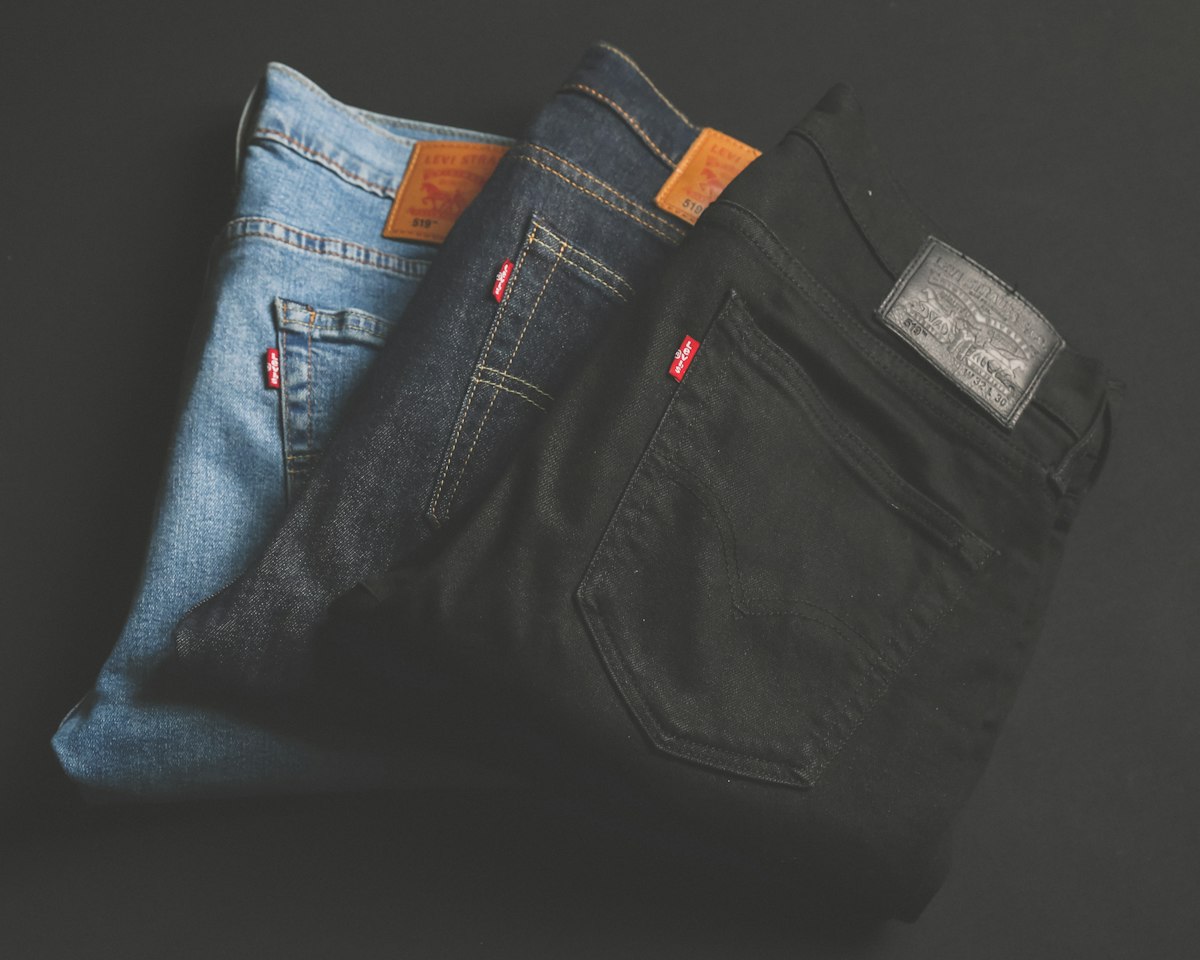
In a world of fast fashion and algorithm-driven micro-trends, Levi Strauss & Co. is doing something unfashionable: playing the long game. The 172-year-old brand — born in the California Gold Rush, worn by James Dean, canonised on Cowboy Carter — posted 7 percent organic revenue growth in fiscal 2025 and declared the year a "true inflection point." Its CEO, Michelle Gass, is the woman charged with turning a $6.3 billion denim company into a $10 billion global lifestyle brand. She is not running a turnaround. She is running an acceleration.
The centrepiece of that acceleration? A bet that denim is not just what you wear on the bottom. It is what you build an entire wardrobe around.
"Levi's holds more market share than its next two global competitors combined."
The mainstream view: a brand earning its moment
The case for Gass's optimism is genuinely compelling. Levi's has delivered 15 consecutive quarters of positive direct-to-consumer comparable sales. DTC now accounts for 50 percent of total revenue — up from 31 percent three years ago — and grew 11 percent in fiscal 2025. The international business, representing 60 percent of revenues, grew 14 percent in Europe and 12 percent in Asia. India — Levi's sixth-largest global market — has grown 50 percent above pre-pandemic levels. Twelve of thirteen Wall Street analysts covering the stock rate it a Strong Buy.
The Beyoncé partnership, sparked by "Levii's Jeans" on the Cowboy Carter album, became the most commercially significant marketing event in the brand's recent history. The first campaign generated 2.4 billion impressions in under a month. U.S. store foot traffic rose 20 percent. The stock jumped 20 percent. For a brand supposedly past its cultural peak, that is an extraordinary demonstration of relevance.
The progressive case for Gass extends beyond revenue. She has raised women to 70 percent of Levi's C-suite, maintained DEI commitments through a hostile political climate, and explicitly targeted female consumers — who represent just 36 percent of Levi's current sales — as the largest untapped growth opportunity in the business. The pitch is simple: half the world's population is an underserved customer.
The case for scepticism: ambition outrunning arithmetic
None of this changes an inconvenient arithmetic problem. Levi's needs to roughly double its revenue to reach $10 billion. At the guided growth rate of 4-5 percent annually, that journey takes 15 to 20 years — not the "aspirational timeline" the company once implied. The original target date of 2027 was quietly dropped. Management now describes $10 billion as a "directional aspiration." Wall Street has noticed. Despite strong fundamentals, LEVI stock gained only 8 percent from Gass's appointment through early 2025 — underperforming the broader market through one of its strongest rallies.
The tariff environment has introduced a structural headwind that patience alone cannot overcome. U.S. apparel tariffs jumped from roughly 13 percent to 54 percent in April 2025, settling at a 36 percent weighted average — enough to compress gross margin by 150 basis points in fiscal 2026. Gass has been candid: "There's only so much you can absorb from the tariffs, because they're just very high." The three-lever response — targeted price increases, fewer promotional discounts, and premium positioning — is coherent. But each lever has limits, and consumers stretched by years of inflation are not infinitely patient.
"Rising anti-Americanism as a consequence of the Trump tariffs" — Levi's own regulatory filing.
Then there is the anti-Americanism problem, which deserves more attention than it typically receives. In 2025, Levi's formally filed a warning with UK Companies House flagging "rising anti-Americanism as a consequence of the Trump tariffs and governmental policies." This is not public relations — it is a legal disclosure. McDonald's reported an 8-to-10-point decline in brand favorability across Northern Europe and Canada. Brown-Forman, which makes Jack Daniel's, watched Canadian sales fall 62 percent. Levi's built its global identity on Americana — the Gold Rush, American rebellion, the cowboy — and that identity, long a competitive advantage, is now a liability in its most important international markets. You cannot easily separate the brand from the flag it was built on.
The DTC-first strategy, meanwhile, has been slower in the U.S. than management anticipated. The wholesale infrastructure — deeply embedded at Walmart, Target, and Macy's — is structurally harder to restructure than Europe's more contained distribution. This is not a crisis. But it is a friction that delays the margin improvement the whole strategy promises.
What it means for you
If you invest in consumer brands, Levi's is one of the more credible stories in global retail — a genuine franchise with pricing power, cultural resonance, and growing international exposure. The DTC model, once complete, delivers structurally superior margins. The women's and Asia theses are real and long-cycle. The risk is not the strategy itself; it is the timeline and the geopolitical overlay.
If you are a business owner watching Levi's operational moves, the SKU rationalisation story is worth studying on its own terms. Gass cut product complexity by 20-25 percent and increased global assortment commonality from under 10 percent to nearly 50 percent. Revenue accelerated. This is one of the clearest recent demonstrations that doing fewer things better is a genuine competitive strategy — not a consolation prize for a company that ran out of ideas.
The world already wants to wear Levi's. The question is whether Michelle Gass can build a company large enough to meet the demand — before the political headwinds make the flag on the label a harder sell than the jeans themselves.